
Why Small Businesses Lose Leads and How Automation Fixes It
Every small business wants more leads. But here’s the hard truth: most small businesses lose leads every single day without even realizing it.
Someone fills out a form.
Someone sends a Facebook message.
Someone clicks on your ad.
And then… nothing happens.
No reply.
No follow-up.
No system.
Leads go cold. Opportunities disappear. Revenue gets left on the table.
The good news? This is fixable. And the solution is not “work harder.” It’s work smarter using automation.
In this in-depth guide, you’ll learn:
Why small businesses lose leads
The real cost of slow follow-up
The biggest mistakes business owners make
How automation captures and converts leads 24/7
A simple step-by-step automation plan you can implement
The Real Problem: Why Small Businesses Lose Leads
Most small business owners think they have a traffic problem.
In reality, they have a system problem.
Here are the most common reasons small businesses lose leads:
1. Slow Response Time
Studies consistently show that businesses that respond within 5 minutes are significantly more likely to convert a lead.
But most small businesses reply:
Hours later
The next day
Or never
Leads today expect instant answers. If you don’t reply fast, your competitor will.
2. No Follow-Up System

Many businesses reply once and that’s it.
But most customers:
Don’t buy immediately
Need reminders
Need more information
Need trust built over time
Without follow-up, interest fades.
3. Leads Scattered Across Platforms
Leads come from:
Facebook
Instagram
Website forms
Google Ads
SMS
Email
If you don’t centralize them, you lose track of conversations.
4. Manual Processes
When everything depends on you or your team:
Messages get missed
Tasks pile up
Things slip through cracks
Manual systems don’t scale.
The Hidden Cost of Losing Leads

When small businesses lose leads, it’s not just about missed messages. It’s about missed revenue.
Let’s break it down.
If you generate:
100 leads per month
Close 10%
Average sale is $500
That’s $5,000 per month.
But if automation helps you close 20% instead?
That’s $10,000 per month.
That’s a $5,000 monthly difference without spending more on ads.
Over a year, that’s $60,000 in lost opportunity.
What Automation Really Means (And What It Doesn’t)
When people hear “automation,” they imagine robots or complicated tech.
But marketing automation simply means:
A system that automatically responds, follows up, and nurtures leads without manual effort every time.
Automation is not:
Spam
Cold robotic replies
Replacing human interaction
Automation is:
Faster response
Consistent follow-up
Organized communication
24/7 availability
How Automation Fixes the Lead Leakage Problem
Let’s look at exactly how automation stops small businesses from losing leads.
1. Instant Response Systems
When someone:
Fills out a form
Sends a message
Books a call
They instantly receive:
A confirmation message
A welcome email
An SMS follow-up
This builds trust immediately.
Speed equals credibility.
2. Automated Follow-Up Sequences
Most leads need 5–8 touchpoints before making a decision.
Automation allows you to send:
Educational emails
Testimonials
Reminders
FAQs
Limited-time offers
Without you manually sending each message.
3. Lead Nurturing Workflows
Not every lead is ready today.
Automation nurtures leads over time by:
Sharing blog content
Sending helpful tips
Offering case studies
Building authority
This positions you as the expert.
4. Centralized CRM Systems
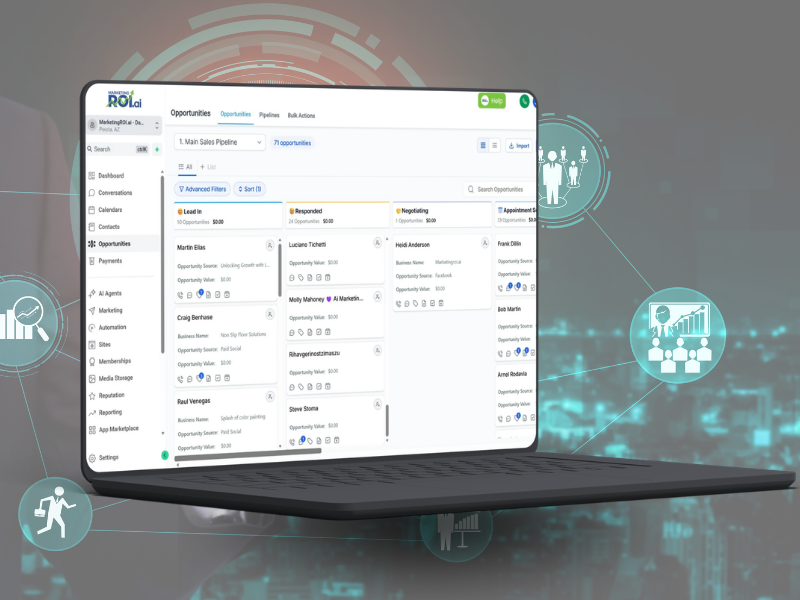
Instead of checking 5 different apps, automation tools store everything in one place.
You can see:
Conversation history
Lead status
Last contact date
Next action step
Step-by-Step: How to Fix Your Lead System With Automation
Here’s a simple plan any small business can implement.
Step 1: Map Your Lead Sources
List where leads come from:
Website
Facebook
Instagram
Ads
Referrals
You cannot automate what you don’t track.
Step 2: Create an Instant Reply System
Set up:
Auto-reply SMS
Confirmation email
Messenger auto-response
Keep it friendly and clear.
Example:
“Thanks for reaching out! We received your request and will contact you shortly.”
Step 3: Build a 7-Day Follow-Up Sequence
Simple example:
Day 1 – Welcome message
Day 2 – Educational tip
Day 4 – Testimonial
Day 6 – FAQ
Day 7 – Strong call to action
This alone can dramatically increase conversions.
Step 4: Track and Measure
Monitor:
Response time
Conversion rate
Cost per lead
Follow-up completion
Automation makes data visible.
And data helps you improve
Common Automation Mistakes to Avoid
Even automation can fail if done incorrectly.
Avoid:
Overcomplicated workflows
Too many messages
Robotic language
No human option available
Automation should feel natural and helpful.
Always give leads a way to speak to a real person.
Final Thoughts: Stop Losing Leads Starting Today
If you’re wondering why small businesses lose leads, the answer is simple:
No system
Slow response
No follow-up
Manual chaos
Automation solves these problems.
It:
Responds instantly
Follows up consistently
Organizes your pipeline
Works 24/7
You don’t need complicated tech.
You need a simple, structured automation system.
Because every lost lead is lost revenue.
And fixing your follow-up system may be the fastest way to grow your business this year.
Frequently Asked Questions (FAQs)
1. Why do small businesses lose leads even when they get traffic?
Most small businesses lose leads because they don’t have fast response systems or follow-up automation. Traffic alone is not enough. Without organized lead management and consistent communication, potential customers lose interest or go to competitors.
2. How fast should a business respond to a new lead?
Ideally within 5 minutes. Quick responses significantly increase conversion rates. Automation tools can send instant replies even outside business hours, ensuring no lead feels ignored.
3. Is marketing automation expensive for small businesses?
No. Many automation tools are affordable and scalable. The cost of losing leads is usually much higher than the cost of implementing automation. Even simple email and SMS automation can dramatically increase revenue.
If your business is generating leads but not converting enough of them, the issue may not be marketing it may be your system.
Fix the system.
Capture every opportunity.
Let automation do the heavy lifting.
